Whether you are a young company or a multinational, the method is the same.
Home > Our growth method
Our growth method has three phases: analysis, to understand your market and measure the gap to close; upgrading your ecosystem, before spending anything to attract traffic; growth, where we roll out and optimize the action plans. Every discipline applies it in its own way, but the order never changes.
It is always better to think before acting. The first phase is about understanding who your real competitors are and how they position themselves against you. From that we produce a gap analysis, which quantifies the work needed to bring your ecosystem up to standard. It is also where we define your personas and build the scenarios to attract and convert them. Nothing launches before this phase is done, because everything that follows depends on it: the budgets, the priorities, and the order in which we work.
If your ecosystem is not ready, there is little point spending money to attract prospects who will not convert. Our experts analyse the customer journeys of each of your personas, then optimize your social media, your content and your website. It is the least visible phase and the most profitable one: it produces no spectacular curve, it makes everything that follows work. We have developed expertise specific to each case, for our B2B partners as much as our ecommerce ones.
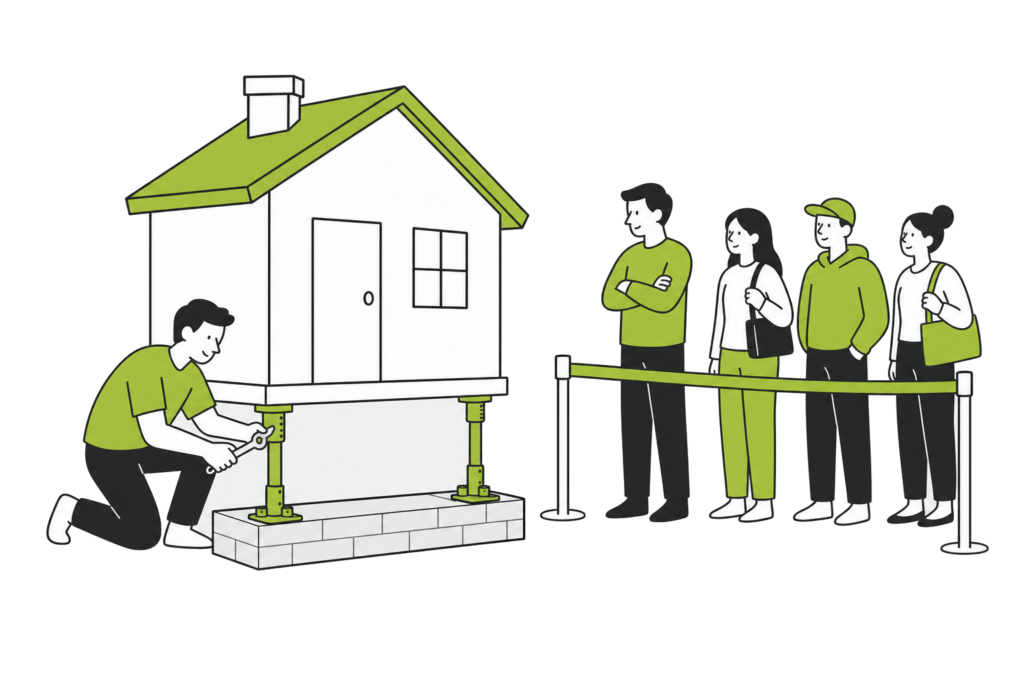
Once everything is ready and the strategy clearly defined, we roll out and optimize the action plans to generate growth, across every medium and every relevant source. This phase does not stop: it is measured, corrected and adjusted. What we learn here often feeds back into the analysis phase, because a market moves and a two-year-old analysis is not worth much.
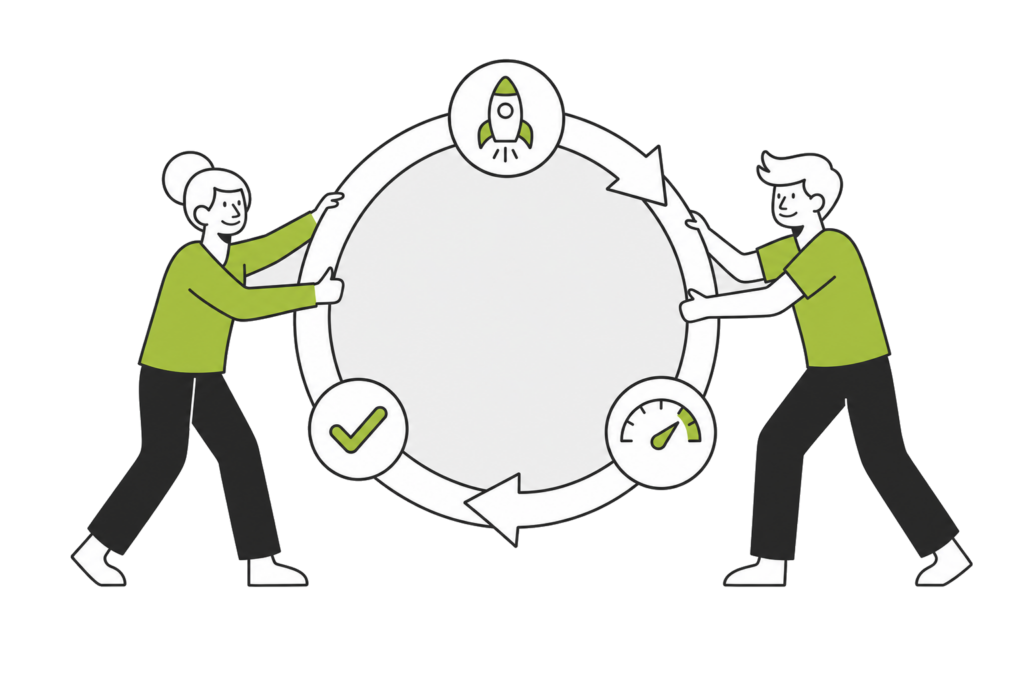
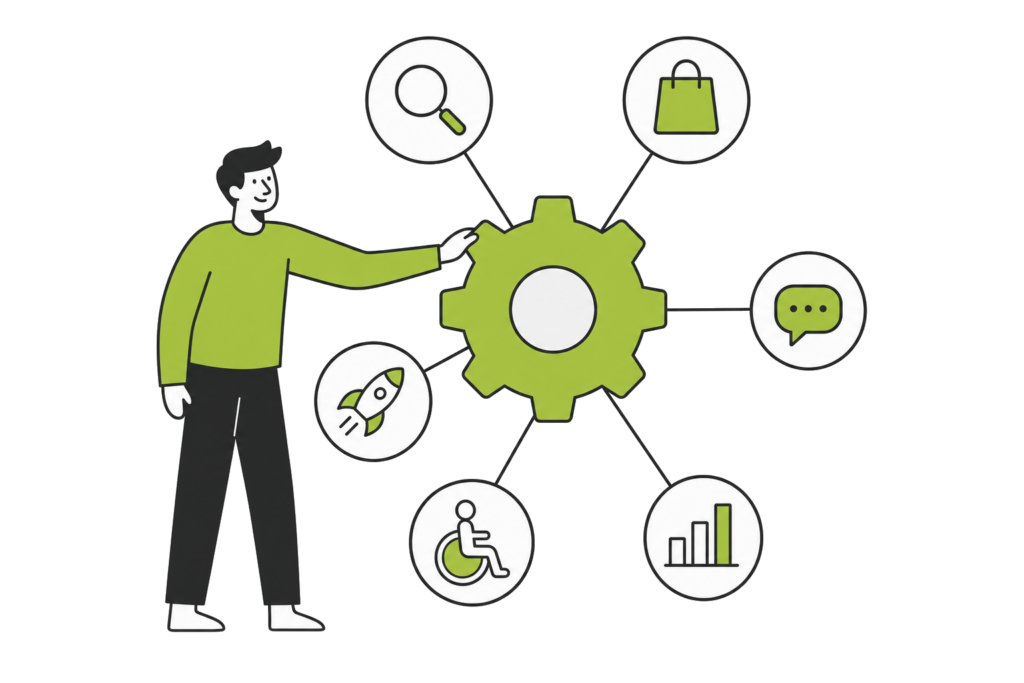
Each discipline applies these three phases in its own vocabulary. In organic search, the analysis is semantic and the upgrade is technical. In paid acquisition, the analysis sets the cost per lead and the ROAS to reach. In social media, it measures how often you show up and how well the audiences are built. In conversion rate optimization, it starts from the funnel. In RevOps, it measures the gap between your three teams' numbers. In analytics, it starts with what the current measurement lets through. In program management, it looks at what gets lost between the end of one campaign and the start of the next. Three disciplines have their own detailed method, because they describe something the others do not: GEO, HubSpot implementation and the accessibility audit.
Share of the marketing data used to make business decisions that is incomplete, inaccurate or out of date (Adverity, survey of chief marketing officers, September 2025)
Average documented online shopping cart abandonment rate, across 50 studies run between 2006 and 2025 (Baymard Institute, updated 22 September 2025)
Because everything that follows depends on it. Without knowing who your real competitors are, how they position themselves and where the gap sits, budgets and priorities get picked at random. According to an Adverity survey of chief marketing officers, 45% of the data used to make decisions is incomplete, inaccurate or out of date: that is the first problem to solve.
It depends on your situation and the state of your ecosystem. Analysis is the shortest, the upgrade varies a great deal depending on what the gap analysis reveals, and growth does not stop. We set the schedule with you at the end of the first phase, once we know what there is to do.
No. Whether you are a young company or a multinational, the three phases are the same and in the same order. What changes is what goes into each one: the scale of the upgrade, the budgets, the number of personas and the number of channels.
You can, and it is usually a bad idea. Driving traffic to an ecosystem that does not convert means paying for visitors who leave. The average online cart abandonment rate is 70.22%, across fifty studies: the room to improve is almost always on what happens once the visit has started.
Through measurement, from the third phase onward, with indicators defined in the first. That is what allows corrections along the way rather than at the end. Our analytics page describes how we implement that measurement.
Rarely, and deliberately so. The gap analysis says where to start and in what order, based on what pays off soonest for the effort involved. A plan that starts ten projects at once finishes none of them.
Sekoia is a lean growth agency that helps small and medium-sized businesses perform better in highly competitive markets. Pioneers in Generative Engine Optimization (GEO) in Quebec.
COPYRIGHT @ SEKOIA – 2026