The same definitions, the same stages, the same numbers for marketing, sales and service.
Home > RevOps: one revenue system
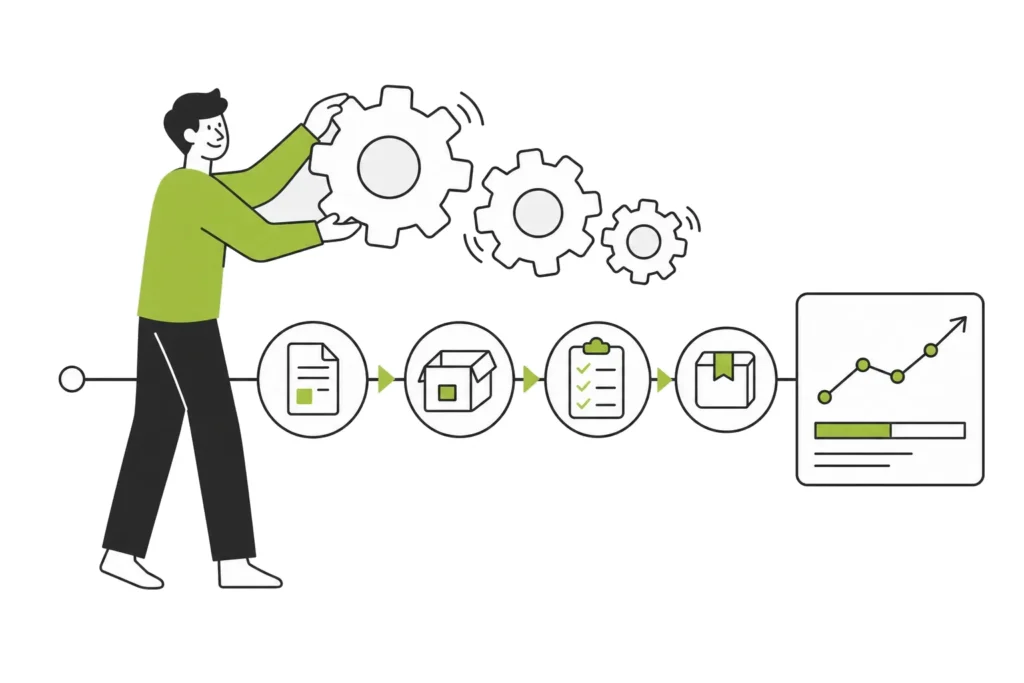
RevOps, or revenue operations, makes marketing, sales and service work together around a single revenue process. At Sekoia, it starts with definitions and pipeline stages, continues with data hygiene, and ends with reports all three teams read the same way.
Marketing counts leads, sales count opportunities, management counts revenue, and the three numbers never meet. Nobody is lying: each team measures something else, at a moment that suits them, in the tool they know. As long as that disagreement lasts, every meeting starts with an argument about the numbers instead of a decision about what to do.
What is a marketing qualified lead at your company? When does it become sales qualified? Who decides, and on what criterion? If those acronyms mean something to you, you already know the answer varies from one person to the next inside the same company. We write those definitions with your teams, then we put them into the tool. In that order, never the other way round.

A useful pipeline describes what actually happens, not what you would like to see. We go through the stages one by one, we set a verifiable exit criterion for each, and we clean up the data feeding them. That is what makes forecasts credible: an opportunity in stage 3 means the same thing to everyone, including whoever reads the report at quarter end.

Lead assignment, follow-ups, scoring, notifications: all of it works well once the process is clear. Automating a shaky process does not repair it, it produces the same mistakes faster and at greater scale. So we automate last, and only what saves your teams time without taking away their judgement.
See the case of a Quebec retailer: customer data cleaned before its online store migration.
Share of marketing teams who struggle to prove return on investment across channels. (Supermetrics, 435 respondents, 2026 report)
Share of marketing teams who do not own their data strategy. (Supermetrics, 435 respondents, 2026 report)
Share of marketing data used for business decisions that is incomplete, inaccurate or out of date. (Adverity, survey of chief marketing officers, September 2025)
RevOps, or revenue operations, is the discipline that aligns marketing, sales and service on a single revenue process: same definitions, same pipeline stages, same numbers. It is not a tool, it is an agreement between three teams, which we then write into whichever tool you already use.
A HubSpot engagement installs, migrates and connects the platform. RevOps works on the process itself, and it holds whatever your tool is. So we can do RevOps without you changing CRM, and that is in fact what we recommend before any migration: moving a shaky process does not repair it.
Less than you would think. According to an Adverity survey of chief marketing officers in September 2025, 45% of the data used to make business decisions is incomplete, inaccurate or out of date. And according to Supermetrics, 40% of teams struggle to prove return on investment across channels. RevOps tackles that first.
No. The process comes before the tool. If your current CRM can carry your definitions and your stages, we work with it. If it really cannot, we will tell you, but after the diagnosis and not before.
Marketing, sales and service, plus whoever reads the numbers at quarter end. An agreement on definitions only holds if the people applying them every day wrote it with us. It takes longer at the start, and it is what makes it survive after we leave.
In four stages: a diagnosis of your definitions, your real stages and the gap between your teams' numbers, shared definitions written with you, rebuilding the pipeline and its data, then shared reports and automation. It is how our three-phase method applies to revenue operations.
Sekoia is a lean growth agency that helps small and medium-sized businesses perform better in highly competitive markets. Pioneers in Generative Engine Optimization (GEO) in Quebec.
COPYRIGHT @ SEKOIA – 2026